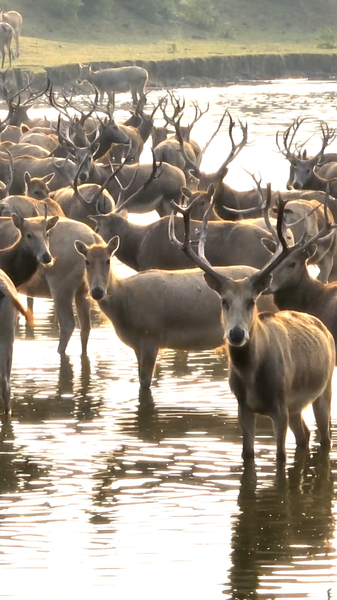
A comeback 40 years in the making
Think of the milu deer as the “phoenix” of wildlife 🦌🔥. Native to the Chinese mainland, these graceful creatures vanished from the wild over a century ago. But thanks to a game-changing partnership with the UK in 1985, the species is living proof that we can rewrite nature’s story.
It all kicked off in 1985, when conservationists brought back a small herd. By 1986, another group was released in what’s now Dafeng Milu National Nature Reserve in Jiangsu Province. Fast forward to today: around 15,000 milu roam the Chinese mainland, with over 6,000 thriving in the wild—their largest free-ranging population anywhere on Earth 🌍.
How did this happen? It took three key steps:
- Breeding programs: Careful mate pairing and veterinary care boosted healthy births.
- Habitat restoration: Wetland rebuilding and invasive plant control created safe spaces—kind of like how mangrove planting in Southeast Asia helps coastal wildlife.
- Smart tech: GPS collars and drone monitoring keep track of herds without disturbing them.
This epic recovery isn’t just a win for milu fans—it’s inspiration for young conservationists across South and Southeast Asia. From India’s tiger reserves to Indonesian orangutan sanctuaries, our region is full of stories where people and tech team up to protect biodiversity 🌱🤝.
As we celebrate 40 years of milu success, let’s remember: big wins start with small steps. Whether you’re sharing wildlife photos, volunteering at a local reserve, or using eco-friendly apps, you can help shape the next chapter of nature’s revival. After all, every species deserves a second chance.
Reference(s):
China's milu deer make triumphant comeback 40 years after extinction
cgtn.com