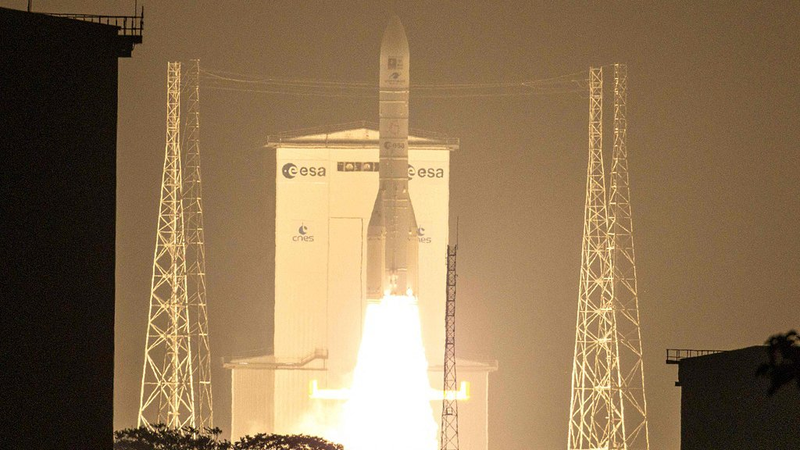
On December 17, 2025, Europe’s latest heavy-lift rocket, Ariane 6, soared into the early morning sky 🚀 from French Guiana’s Spaceport, marking a key step for the Galileo program.
Mission VA266—the fifth flight of Ariane 6—celebrated its maiden voyage for Galileo by deploying two satellites, SAT-33 and SAT-34, almost four hours after liftoff. These tech marvels now orbit in medium Earth orbit (about 23,000 km up), the sweet spot where navigation satellites dance around our planet.
Why does this matter for us? If you’ve ever used GPS to find a street food hawker in Bangkok or navigate Mumbai’s bustling lanes, satellites like these are your unseen guides. Galileo is the EU’s answer to GPS, offering precise, reliable, and independent positioning services. It’s the biggest infrastructure project in EU history and a symbol of strategic autonomy in space tech.
For young innovators and globe-trotters across South and Southeast Asia, Galileo’s growing constellation means better maps, smoother rides, and more accurate location services on your apps and devices. Plus, it’s a reminder of how space tech is becoming part of our everyday adventures 🌏✨.
Reference(s):
2 Galileo satellites launch to strengthen global navigation system
cgtn.com