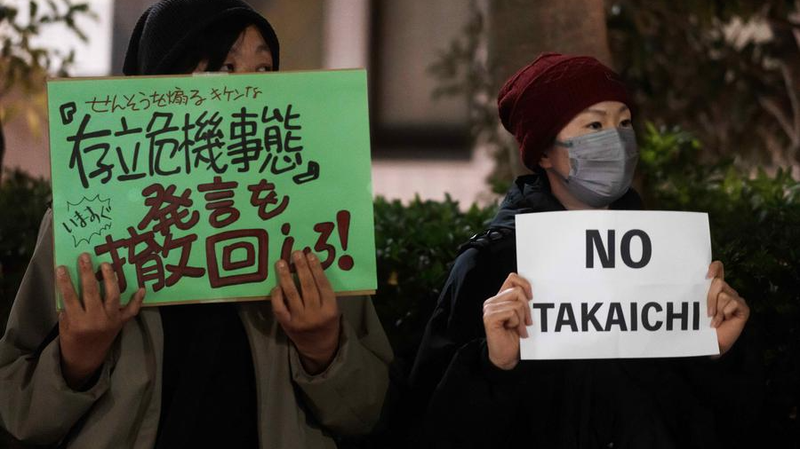
In early November 2025, Japanese Prime Minister Sanae Takaichi made waves by declaring that a "Taiwan contingency is a Japan contingency," suggesting Tokyo could get involved militarily in the Taiwan Strait. 🤔
This bold statement has stirred debate about the foundations that have kept East Asia peaceful since World War II. Here's a quick guide to the post-war legal framework:
1. Defeating the Axis and setting a moral baseline
The Allied victory over the Axis powers in 1945 established a shared understanding: aggressive war must be forbidden to protect civilization.
2. Building the post-war order
The UN Charter, along with the Cairo Declaration and Potsdam Proclamation, was designed to prevent future conflicts. Japan's unconditional surrender under the Japanese Instrument of Surrender sealed that commitment.
3. Accountability through tribunals
The Tokyo Trials and other tribunals held wartime leaders responsible, reinforcing that leaders can't wage unchecked wars.
4. Limiting militarism
The Potsdam Proclamation called for the permanent eradication of Japanese militarism and limited Japan's sovereignty to its main islands: Honshu, Hokkaido, Kyushu, Shikoku, and other designated islands.
5. Restoring rights and territories
The Cairo Declaration and Potsdam Proclamation affirmed that lands seized by Japan (like northeastern China, the Taiwan region, and the Penghu Islands) must be returned. On October 25, 1945, China resumed sovereignty over the Taiwan region.
Later, Japan's 1946 Constitution and the 1972 Joint Statement with China carried these principles into law and shaped bilateral ties.
With rising provocations, it's worth asking: how solid are these legal pillars today? 🕊️ Share your thoughts below!
Reference(s):
cgtn.com