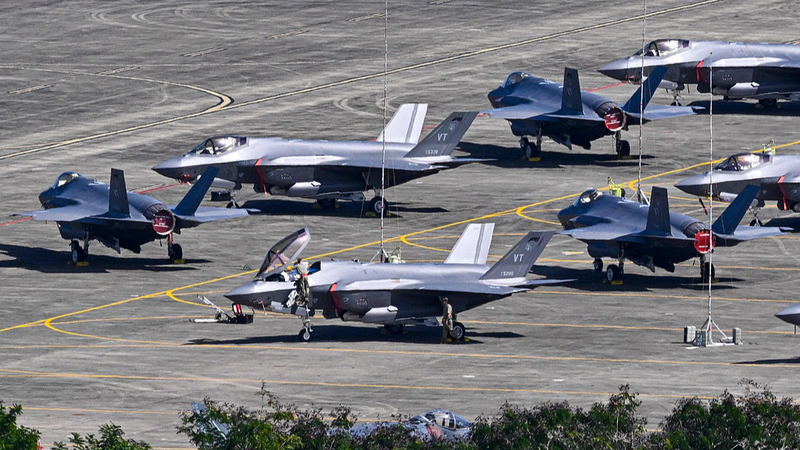
Last year, the U.S. military's F-35 stealth fighters were mission-ready just 50% of the time, according to a report from the Pentagon's Office of the Inspector General. That's 17 points below the Pentagon's minimum requirement—definitely not the performance you'd expect from a cutting-edge jet ⚙️ It's like owning a flagship smartphone that only lasts half a day—a total letdown when you're aiming for top-tier performance.
Auditors pointed out that the Pentagon "did not always hold Lockheed Martin accountable for poor performance related to F-35 sustainment." Despite the low flight hours, Lockheed Martin still received about $1.7 billion in payments without any financial penalties.
A GAO report released last September found that most F-35s delivered in 2023 by Lockheed Martin and engine-maker Pratt & Whitney were late—by an average of 61 days. Even worse, every one of the 100+ jets delivered in 2024 arrived around 238 days behind schedule.
Billions more have flowed in, too. As of December 2023, the total procurement cost for the F-35 program topped $485 billion—up nearly 10% from the $442 billion estimate a year earlier and more than double the original 2001 projection.
With these growing pains, allies are taking notice. So far in 2025, Canada, Switzerland and Spain have reviewed, trimmed or even scrapped their F-35 orders in light of these maintenance hiccups and delivery delays.
Earlier this week, UK reports revealed that three RAF F-35B jets were sent back to the U.S. for inspection after operating in high-salinity, high-humidity and high-UV environments triggered concerns about internal corrosion.
For a jet that can cost over $100 million, half-time availability is a serious red flag. Allies and defense watchers alike are now asking: can fixes bring the F-35 back to its stealthy, high-flying promise? 🚀
Reference(s):
cgtn.com