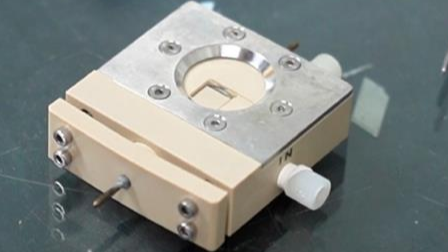
Ever noticed how your phone's battery dies faster than your group chat banter? Turns out, gravity might be to blame! This week, the Dalian Institute of Chemical Physics at the Chinese Academy of Sciences announced that aboard China's Tiangong space station, the Shenzhou-21 crew performed a lithium-ion battery experiment in microgravity 🚀🔋.
Lithium-ion batteries power everything from smartphones to e-scooters thanks to their high energy density. On Earth, gravity mixes up electric fields inside the battery's electrolyte – the liquid highway for ions – making it hard to see what really affects performance and lifespan.
In microgravity, without gravity's tug, scientists can isolate electric fields and watch ions move in real time. Insights from this cosmic lab are expected to crack the code on how to make batteries that last longer, charge faster, and stay safer.
Next up, researchers will use this data to upgrade current orbiting power systems and shape a new generation of high-energy, ultra-safe batteries for future space missions – and maybe even your next-gen gadgets back on Earth 😉🌌.
Reference(s):
Lithium-ion battery experiment conducted aboard Chinese space station
cgtn.com