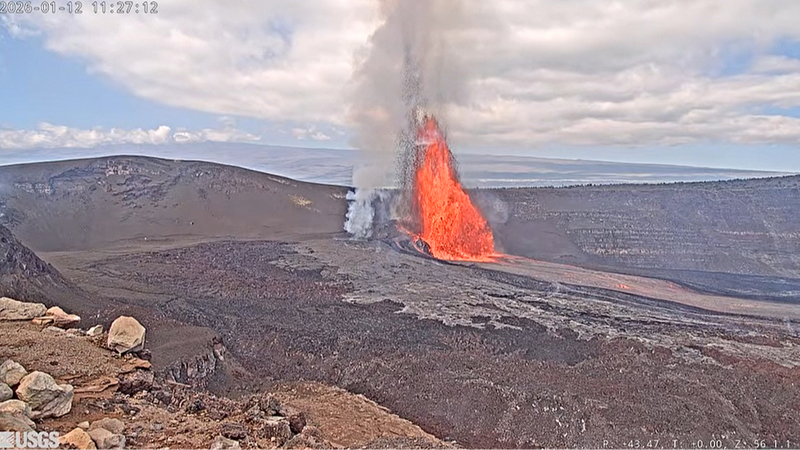
On Monday, January 12, 2026, Hawaii’s Kilauea volcano put on a jaw-dropping lava fountain show 🌋🔥, shooting molten rock over 1,500 feet (460 meters) into the sky.
Kilauea has been bubbling away since it woke up in December 2024, regularly pumping out thousands of tonnes of lava and gases. This nonstop activity has made it one of the world’s most active volcanoes.
Volcanologists from the U.S. Geological Survey say this kind of eruption usually lasts about a day but can release up to 100,000 tonnes of sulfur dioxide. When that gas mixes with moisture and sunlight, it creates a haze called vog (volcanic smog) – think of it like the haze you see in Mumbai or Jakarta during pollution peaks 🌫️. Vog can irritate your lungs and eyes, so locals keep an eye on air quality alerts.
Visitors also need to watch out for ‘Pele’s hair,’ thin strands of volcanic glass named after the Hawaiian goddess of fire. These hair-like shards can land like tiny needles, irritating skin and eyes if you’re too close.
Good news: no towns are at risk right now. The caldera has been off-limits to the public for nearly 20 years, so locals and tourists stay safely back. Still, adventurous drone pilots and helicopter tours (👀 on Instagram!) capture the red-hot action from above.
Kilauea may be smaller than its neighbor Mauna Loa – the largest volcano on Earth – but its constant eruptions make it a must-see for volcano lovers and thrill seekers. If you’re planning a trip to the Islands, keep an eye on USGS updates and prepare for a show that’s both epic and educational.
Reference(s):
cgtn.com