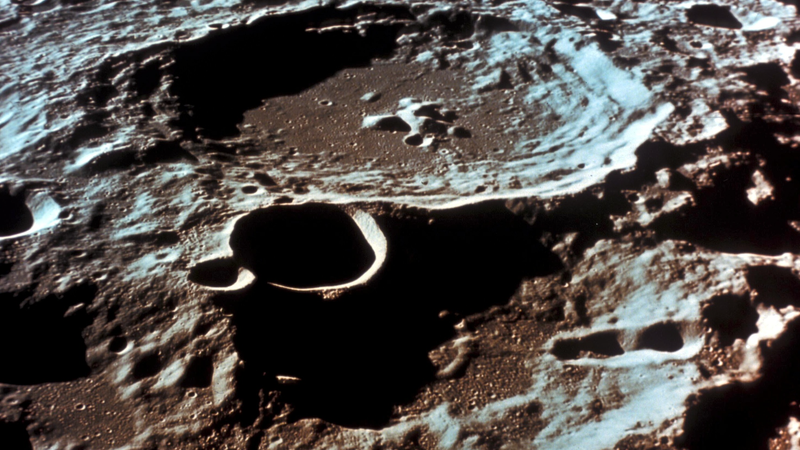
Ever wondered why the moon’s far side—often called the “dark side”—looks so different from the side we see? 🌕 A recent study by researchers at the Institute of Geology and Geophysics, Chinese Academy of Sciences is shedding light on this cosmic mystery.
Published in the Proceedings of the National Academy of Sciences, the team focused on rock samples from the Chang’e-6 mission, which landed in the South Pole–Aitken (SPA) Basin on the far side of the moon. By analyzing potassium (K) isotopes—think of isotopes as different “flavors” of the same element—they found that the lunar mantle around SPA lost a significant chunk of its volatile elements during a colossal impact event.
High-temperature collisions can vaporize lighter isotopes, leaving behind heavier ones. The Chang’e-6 basalts showed heavier K isotope ratios compared to Apollo and meteorite samples, ruling out factors like cosmic rays or magmatic processes. Instead, a giant asteroid impact likely blasted lighter volatiles into space, reshaping the moon’s internal chemistry.
This volatile loss might explain why the far side has fewer maria (the dark, basaltic plains) and less volcanic activity than the near side. It’s like baking two cakes with slightly different recipes—one turns out fluffier, the other denser.
For space enthusiasts from New Delhi to Manila, these findings are a reminder of how dynamic our celestial neighbor really is. As missions multiply—India’s Chandrayaan, China’s Chang’e, and NASA’s upcoming Artemis projects—we’re piecing together the moon’s story one sample at a time. 🚀🔬
Next time you look up at the night sky, remember: every crater and plain on the moon tells a tale of ancient cosmic collisions and the secrets hidden beneath its surface.
Reference(s):
Giant impact on moon's far side led to volatile loss from lunar mantle
cgtn.com