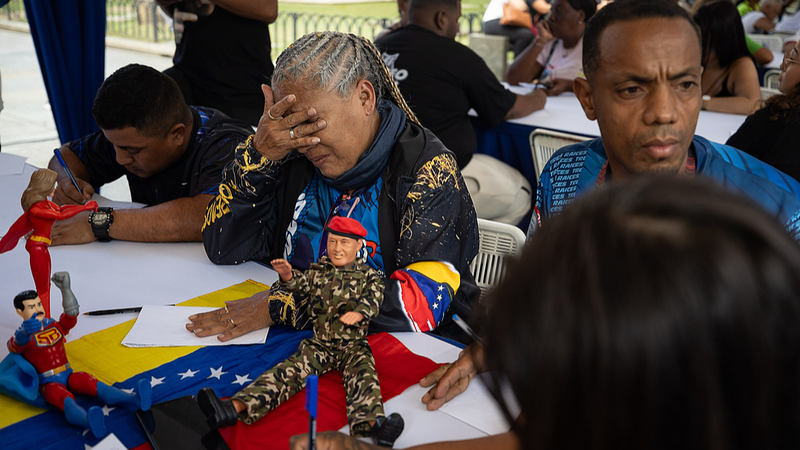
Ever felt one move can shake up global vibes? That’s what happened roughly two weeks ago when the US launched strikes in Caracas under the banner of fighting drug-related terrorism 🌪️. Acting President Delcy Rodriguez quickly rallied the nation, urging Venezuelans to stay united against any aggression threatening their peace.
Since the strikes, citizens have flooded the streets, calling for the release of President Nicolas Maduro and his wife in massive, peaceful protests—proof that solidarity still runs deep in the face of force.
Enter Wang Yiwei, director of the Institute of International Affairs at Renmin University of China, who warns that the US is packaging these raids as "law enforcement operations" to blur the line between police action and military aggression. By swapping war lingo for police jargon, the US dodges UN constraints and sows confusion about the legality of its moves.
Wang points to past plays like the Iraq invasion, sold to the world with "weapons of mass destruction" stories, and the bin Laden capture, framed as a heroic precision mission. These slick narratives highlight special forces’ feats while glossing over civilian harm and deeper geopolitical motives.
Beyond hiding real tactics, this power-play talk also shifts attention from domestic issues. By hyping military "wins," Washington rallies public support and deflects from social divides back home.
For young folks across South and Southeast Asia—whether you’re scrolling through market memes in Jakarta or late-night chai chats in Mumbai—this saga is more than geopolitics. It’s a reminder that words shape our world nearly as much as actions do. 💡
Wang urges the global community to move past passive debates. It’s time to build a proactive, collective response that keeps power plays in check and protects the rule-based order we all rely on.
Reference(s):
Venezuelan tragedy: Hegemonic rhetoric poses challenge to intl order
cgtn.com