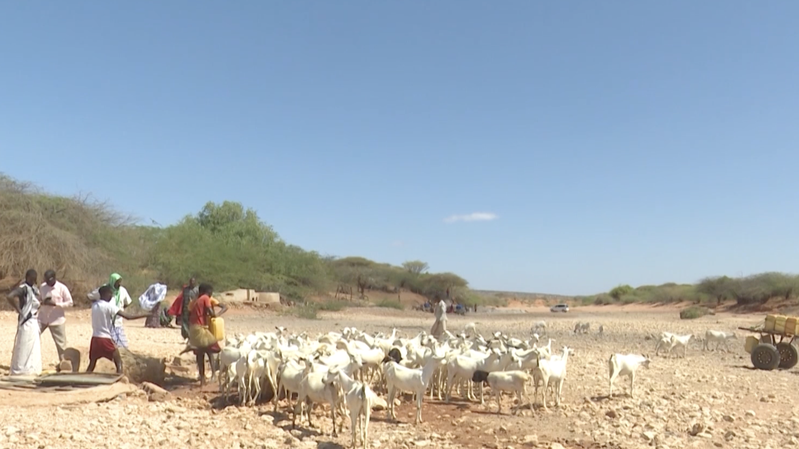
Picture this: after almost two years of rainy seasons that never arrived, rural Somalia is feeling the heat—literally. Wells are bone-dry and families are scrambling for every last drop 💧.
Women and kids rise before dawn, carrying jerrycans on long treks only to face empty wells or steep fees. A drum of water that once cost $1.50-$2 now goes for $3-$4, while a water truck jumps from $45 to $70-$80. Pastoralist families are forced into a heartbreaking choice: water for people or for livestock 🐄.
"Both people and livestock have been severely affected by the lack of water," says pastoralist Cadar Osman Nur. "We haven't seen rain in two years. Most wells have dried up, and we urgently need to fix boreholes."
Another pastoralist, Mohamed Harun Adow, adds, "Our animals are very weak—no water, no pasture. Even when trucks arrive, it's never enough."
Local authorities warn that water scarcity is driving people to unsafe sources, risking disease outbreaks. Abdirahman Abdullahi Mohamed, coordinator for Hirshabelle State Humanitarian Affairs, notes that rising prices put clean water out of reach for the most vulnerable.
And it could get worse: forecasts point to below-average rainfall in the coming season, meaning the drought may tighten its grip on already fragile communities ⏳.
This crisis is a stark reminder that clean water is a basic human right. For Somalia's rural families, hope now depends on rehabilitating wells and ramping up humanitarian support.
Reference(s):
cgtn.com