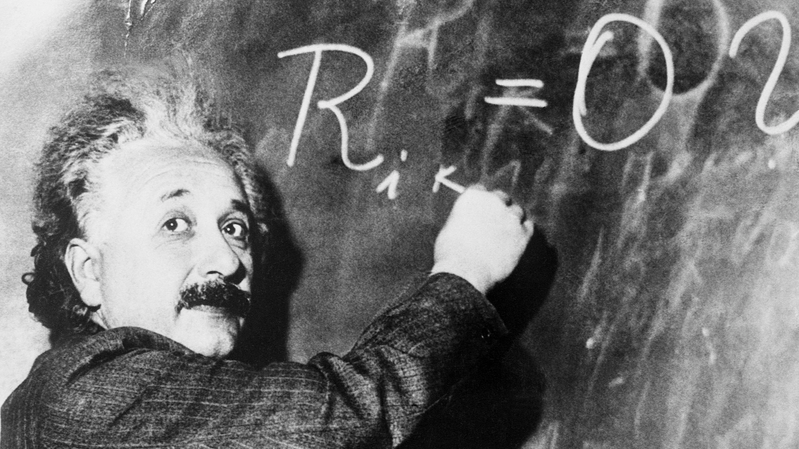
Imagine a 100-year-old physics face-off finally wrapped up this week 🤯. A team of scientists from the Chinese mainland’s University of Science and Technology of China (USTC) has recreated Einstein’s famous 1927 thought experiment and proven once and for all that quantum particles are either waves or particles – never both at the same time.
What's the big idea? Back in 1927 at the Solvay Conference, Albert Einstein challenged Niels Bohr’s complementarity principle. Bohr said quantum objects have dual personalities – wave-like interference or particle-like paths – but you can’t observe both together. Einstein wasn’t convinced and dreamed up a clever tweak to the double-slit setup to test it.
The modern twist The USTC crew, led by Professor Pan Jianwei (aka China’s 'father of quantum'), built an ultra-sensitive apparatus 🔬. They tracked single photons and showed that any attempt to tag a photon’s path instantly destroys its interference pattern. Observe the pattern, and you lose the path info. It’s quantum mechanics 101, validated in the lab.
In plain terms: It’s like choosing between chai and kopi at your local stall – you can enjoy one flavor at a time, but not both simultaneously ☕️. That’s the essence of complementarity: measurement picks one reality and hides the other.
Why it matters This definitive proof settles a century-long debate and cements the Copenhagen interpretation as more than a philosophical fancy. It shows that the weirdness of quantum behavior is a fundamental feature of nature, not a glitch in our experiments.
Beyond its mind-blowing implications for quantum theory, this achievement highlights China’s cutting-edge capabilities in fundamental research. Cheers to pushing the boundaries of reality and proving that sometimes, science can be even more surprising than fiction 🎉.
Reference(s):
Chinese physicists settle Einstein and Bohr's quantum debate
cgtn.com