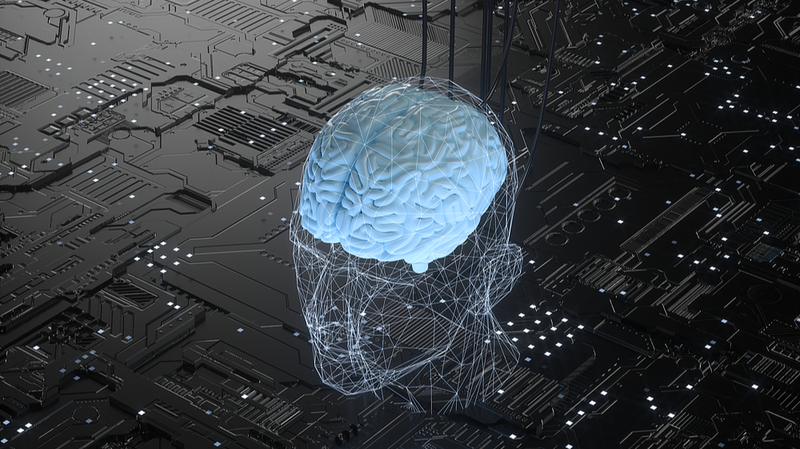
Recently, Chinese scientists achieved a major breakthrough in invasive brain-computer interfaces (BCIs), letting patients with paralysis navigate wheelchairs and even command robot dogs using only their thoughts 🤯.
In a collaboration between the CAS Center for Excellence in Brain Science and Intelligence Technology and Huashan Hospital (Fudan University), scientists implanted ultra-thin electrodes – each less than 1% the width of a human hair – into the motor cortex of a man with quadriplegia this March. The result? He can now steer a wheelchair outdoors and even command a robotic dog to fetch takeout using only his thoughts! 🙌
BCI comes in three flavors: invasive, semi-invasive, and non-invasive. This latest leap focuses on invasive systems, where electrodes are directly implanted into the brain for ultra-precise control. So far, two participants have undergone implantation, unlocking real-world "3D actions" beyond the usual 2D screen tasks like cursor control.
Here are the four core tech upgrades powering this breakthrough:
- Neural data compression & hybrid decoding: boosts overall system performance by 15-20% through smarter signal processing.
- Neural manifold alignment: keeps decoding stable by filtering out noise from emotions or environmental changes.
- Online recalibration: auto-adjusts in real time, skipping the usual downtime for manual recalibration.
- Ultra-low latency: slashes delay from thought to action to under 100 ms (faster than our natural ~200 ms!).
The big win? Patients can now navigate dynamic, obstacle-filled environments without any noticeable lag – making mind-controlled devices feel like a seamless part of their bodies. Imagine the possibilities for accessibility, gaming, and even future VR/AR setups! 🎮🚀
While these trials are still in early stages, they symbolize a huge step toward restoring independence for those with motor impairments and hint at a future where thought-driven tech becomes part of everyday life. Stay tuned – the mind-machine frontier is just getting started! ✨
Reference(s):
Chinese scientists make breakthrough in brain-computer interface trial
cgtn.com