Here's a fresh scoop dropping hot from Harbin: newly declassified documents have shed more light on the gruesome crimes of Japan’s Unit 731 😱.
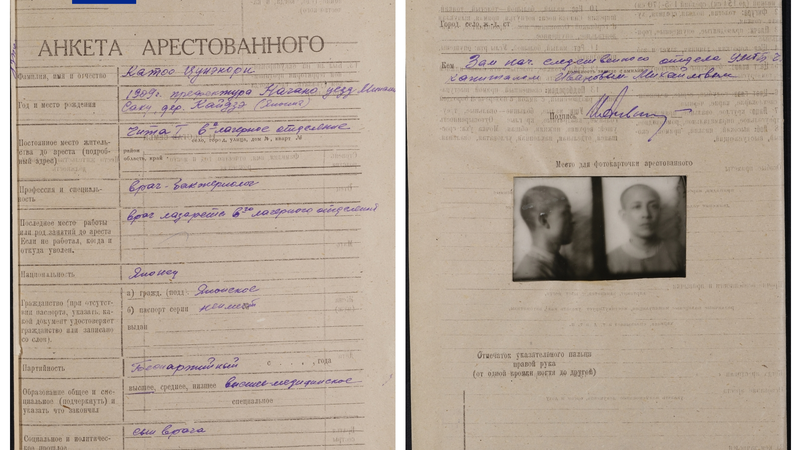
Earlier this year (Feb 2025), the Pushkin Scientific Library requested and received archival material from a regional branch of the Russian Federal Security Service. Shortly after, a photocopy landed at the Exhibition Hall of Evidences of Crime Committed by Unit 731 in Harbin, Heilongjiang Province.
The star of the show? A handwritten confession by Kato Tsunenori from February 1948, plus detainee files and registration forms. It’s bilingual: the Japanese original and its Russian translation. Together with declassified Soviet interrogation records, it forms a 🔗 unbroken chain of evidence.
What’s inside? Detailed breakdowns of Unit 731’s structure and missions, from leadership roles to experimental labs. We’re talking chilling firsthand accounts of:
- Frostbite testing on live subjects in January 1945 near Hailar, Inner Mongolia Autonomous Region ❄️
- Poison gas experiments on humans in July 1945 at Qiqihar, Heilongjiang Province ☠️
- Anthrax-loaded artillery shells detonated near Harbin to track infection rates among people and horses 💣
- Flea-breeding techniques for plague spread, using infected rats 🐜🐀
This confession nails down how Unit 731 was a state-backed, systematic program of biowarfare and human experimentation. It’s a sobering reminder of the dark side of 'science' turned weapon.
For history buffs and anyone passionate about human rights, these docs fill gaps in the Khabarovsk War Crimes Trials and confirm the top-down orchestration of these atrocities.
Feeling shocked? You’re not alone. These revelations underscore why remembering history—warts and all—is crucial for building a safer future 🌏.
Reference(s):
cgtn.com