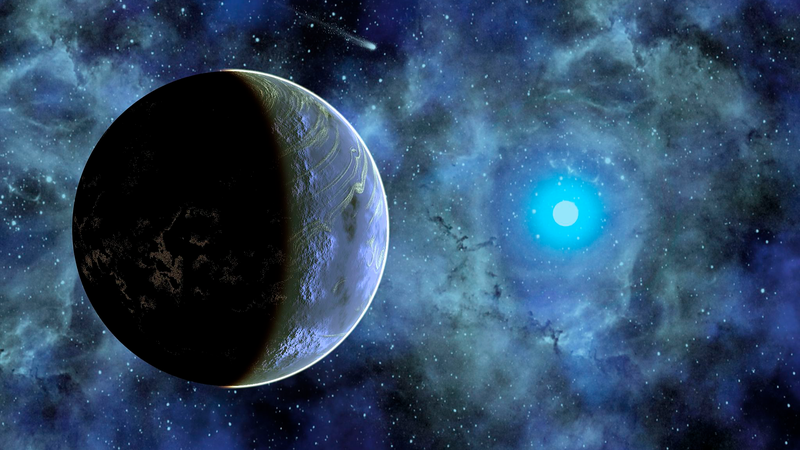
Ever wondered if planets can roam solo in the galaxy? 😲 A team of Chinese astronomers from the Department of Astronomy at Peking University just made history by directly measuring the mass of a free-floating object—aka a rogue planet—for the first time ever.
Using advanced techniques, the researchers locked onto the object’s gravitational microlensing signature, a method where the gravity of a massive object bends and magnifies light from a background star. By analyzing this bending in detail, they calculated that this cosmic wanderer packs roughly the same punch as Saturn—about 95 times the mass of Earth! 🪐
The groundbreaking study was published on January 2, 2026, in the journal Science. This marks a major milestone in exoplanet research, opening a new window into how planets form, evolve, and cruise solo through the galaxy.
Why it matters? Well, free-floating planets breeze through space without a parent star, making them notoriously tricky to spot. Direct mass measurements give us the missing piece of the puzzle, helping scientists understand if these objects are failed stars, ejected young planets, or something entirely unexpected.
For young stargazers and sci-fi fans across South and Southeast Asia, this discovery fuels the imagination: Saturn-mass worlds drifting in the Milky Way, untethered and unseen—until now! 🌌
Stay tuned as astronomers gear up with next-gen telescopes and surveys to hunt down more of these solitary planets. Who knows what cosmic secrets they’ll uncover next?
Reference(s):
Chinese scientists confirm planet identity for free-floating object
cgtn.com