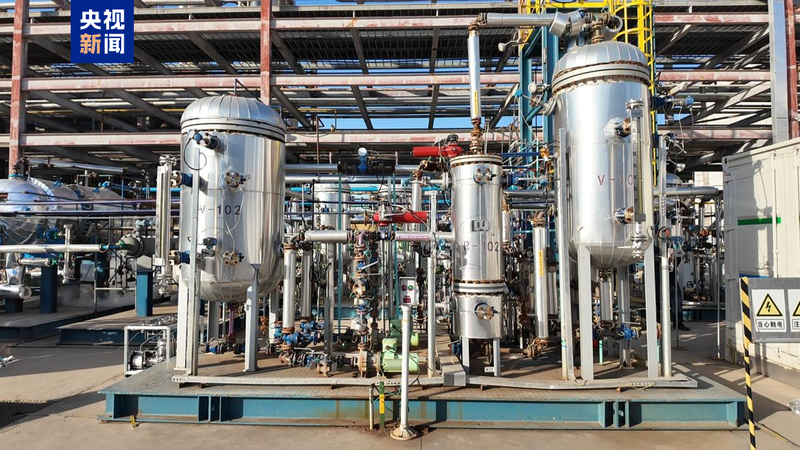
On Tuesday (Jan 6, 2026), researchers at the Dalian Institute of Chemical Physics (DICP)—part of the Chinese Academy of Sciences—validated a game-changing tech to tackle hydrogen sulfide (H2S), the highly toxic byproduct from natural gas wells, refineries, and coal-based chemical plants.
H2S is notorious for its rotten-egg smell and corrosive nature, giving gas producers headaches from Malaysia’s offshore rigs to coal plants in India. After 20+ years of R&D, the DICP team blended photolysis (breaking molecules with light) and electrochemical methods (using electricity to trigger reactions) to scale up H2S decomposition like never before.
Right now, in a coal chemical demo project in northern China, the system slurps up 100,000 cubic meters of H2S annually, converting nearly 100% into high-quality sulfur (hello, fertilizers!) and high-purity hydrogen (fuel-cell ready!).
Li Can, academician at the Chinese Academy of Sciences, explains: “Many natural gas wells in China can’t be tapped because of high H2S levels. This tech not only cleans up the toxic gas, it gives us clean hydrogen and sulfur.”
He adds: “Hydrogen can now be made safely, cheaply, and on a big scale—powering fuel cells and even aerospace projects 🚀.”
Why it matters: for tech-savvy, eco-conscious folks across South and Southeast Asia, this could mean cleaner air, cheaper green hydrogen, and fresh opportunities in sustainable chemistry. The future is bright (and odor-free)! 🌱
Reference(s):
cgtn.com