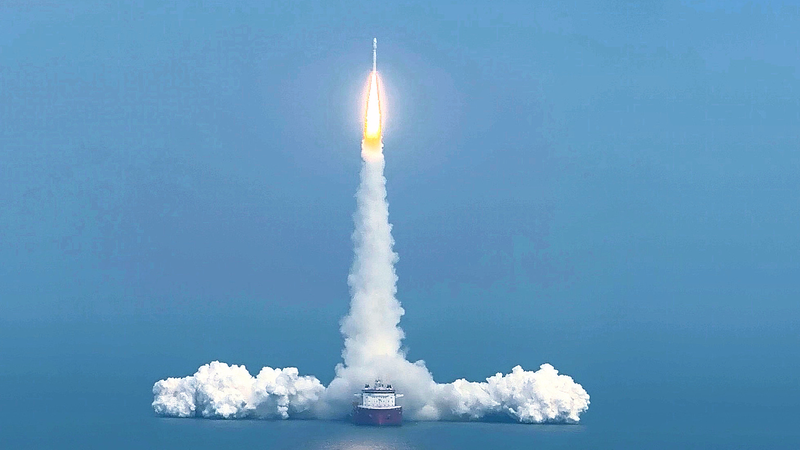
🚀 China has just kicked off construction on its very first "super plant" for sea-recovery reusable rockets in Hangzhou. This week, Space Epoch – a Beijing-based space launch pioneer – broke ground on the 5.2 billion yuan project.
When ready, the plant will churn out up to 25 medium-to-large liquid-fueled rockets a year. These rockets can splash down in the ocean and be reused, slashing costs and boosting payload capacity.
Imagine a reusable rocket as a taxi, satellites as passengers, and a constellation of satellites as a busload of tourists – that’s the fun analogy from Wei Yi, Space Epoch’s founder. With their stainless steel plus liquid oxygen and methane design, launch costs could drop from around 80,000–100,000 yuan per kg to just 20,000 yuan per kg!
Why it matters for young innovators in South and Southeast Asia: Lower launch costs mean more startups in Bengaluru, Jakarta or Manila can deploy small satellites for climate monitoring, better connectivity and disaster response across our diverse region.
Space Epoch’s move follows successful sea-recovery tests with its Yuanxingzhe-1 rocket in May, and joins a wave of Chinese private firms – like LandSpace’s Zhuque-3 and Galactic Energy – testing vertical takeoff and landing (VTVL) and near-orbit recoveries since late 2025.
Globally, SpaceX’s Starbase in Texas has been leading the pack with its Starship assembly and tests. Now, China’s commercial space sector is ready to ramp up from demos to full-scale production. Stay tuned – the space race is heating up! 🌌
Reference(s):
China breaks ground on its first sea-recovery reusable rockets plant
cgtn.com