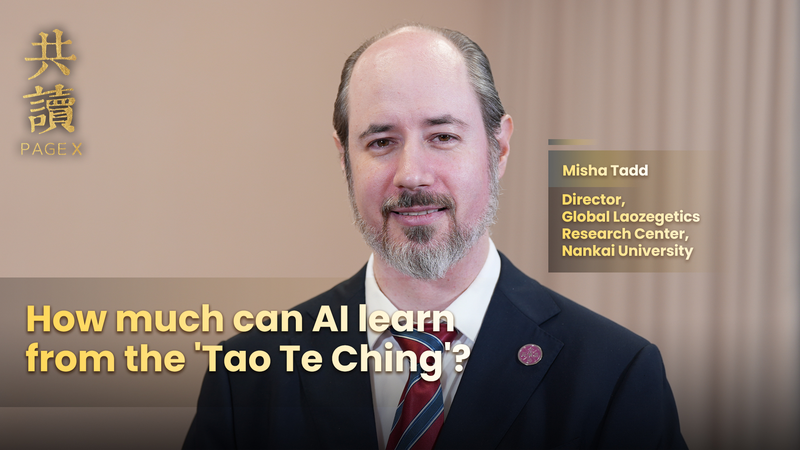
Can AI move beyond crunching data to really understand the ancient wisdom of the Tao Te Ching? 🤔 In a chat with CGTN, sinologist Misha Tadd of Nankai University dives into this question.
Efficiency on steroids 🤖⚡
With the power of natural language processing (NLP) and machine learning, AI can compare dozens of English translations of the Tao Te Ching in minutes—something human scholars might spend months on. It spots patterns, themes, and language shifts across versions, mapping how ideas evolve over time. Think of it like Spotify recommending ancient verses instead of songs! 🎵📜
But here’s the catch: “The Tao that can be told is not the eternal Tao.” AI learns from words and data, yet the Tao Te Ching is more than text. It’s about lived, non-verbal experience—meditation, the flow of qi, and the art of calligraphy. These are dimensions AI can’t feel or practice. 🧘♀️🖌️
Wisdom needs the human touch 💡
As AI tools get smarter, they’ll keep supercharging research—perfect for tech-savvy scholars and curious minds across South and Southeast Asia. But true wisdom still calls for reflection, intuition, and that moment when ancient lines resonate deep within us.
AI can guide us through the text, but the real journey into the Tao is ours to embark on. Ready to explore? 🚶♂️🌿
Reference(s):
cgtn.com