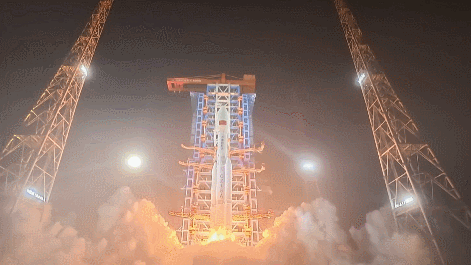
Hey space fans! 🚀 On Tuesday night (Jan 13, 2026), China launched its 18th batch of low-Earth-orbit internet satellites from the Hainan commercial launch site in southern Hainan province.
The Long March-8A rocket, built by the China Academy of Launch Vehicle Technology, lifted off at 11:25 p.m. with a total weight of 371 tonnes and a thrust of 480 tonnes. Measuring 50.5 meters long, it can carry up to 7 tonnes into a sun-synchronous orbit at 700 km altitude—perfect for building out satellite constellations that promise faster, more reliable internet.
This mission marks the 625th flight of the Long March rocket series, underlining China's rapid growth in space tech. For us in South and Southeast Asia, more LEO satellites means better coverage, especially in remote areas where ground infrastructure is scarce. Imagine stable internet for students in the Himalayas or digital entrepreneurs in Borneo! 🌐💡
Low-Earth-orbit (LEO) satellites, flying between 500–2,000 km above Earth, are closer than traditional geostationary satellites. This reduces signal delay, giving you smoother video calls, lag-free gaming, and quicker data downloads—all vital for our hyper-connected lives. 📱✨
As the global space race keeps heating up, these launches show how satellite networks are becoming a key part of future digital infrastructure. Stay tuned for more updates on how LEO internet constellations will reshape our online world! 😉
Reference(s):
cgtn.com