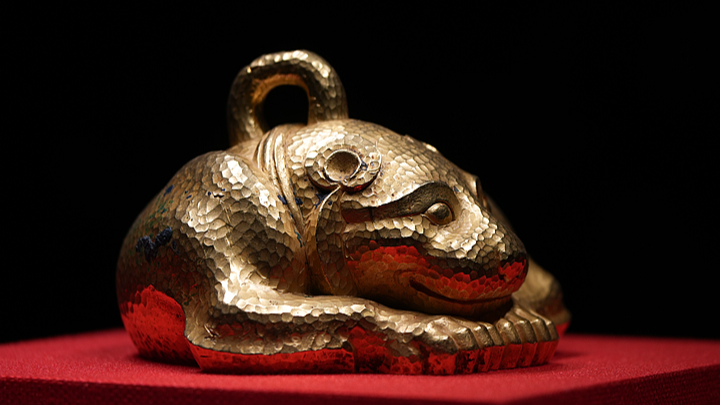
🚀 On January 14, 2026, the Key Laboratory of Archaeological Science and Cultural Heritage Protection at the Chinese Academy of Social Sciences (CASS) held its first major achievement conference of the year at the Chinese Academy of History. Hosted by CASS and co-organized by its Bureau of Scientific Research, the Chinese Academy of History, the Institute of Archaeology, and the University of CASS, the event showcased six mind-blowing archaeological breakthroughs. 🏺
1. World-class Zooarchaeological Library
Think of it as a time capsule for China’s furry and feathered ancestors: over 100,000 specimens (ancient bones, fossils, and even living samples) from 121 sites in 26 provinces. Multidisciplinary research on these will shed new light on the evolution of Chinese civilization. 🐾🦴
2. Next-gen Field Archaeology & Conservation Model
By combining precision excavation, emergency protection, and restoration research – exemplified by the 2018 Xuewei No. 1 Tomb project – teams have scientifically restored rare relics like lacquered horse armor and the only surviving Tang-dynasty gilded bronze armor. 🏇✨
3. Tang-era Tie-Dye Fabric Finds
Excavations in Dulan uncovered fabrics dyed no later than 750 AD, making them the world’s earliest surviving tie-dye artifacts. Carbon-14 dating (a method of measuring radioactive carbon to find age) confirms China as the birthplace of this ancient textile art – cool bonus for fashion lovers! 👗🎨
4. 10,000 Years of Dryland Agriculture
Focusing on sites north and south of the Yanshan Mountains, researchers used radiocarbon dating and stable isotope analysis (tracking carbon and nitrogen) to map three key time nodes in dryland farming. This helps us understand how early communities thrived without irrigation. 🌾⏳
5. Earliest Bayberry Trees from Liangzhu Culture
Through dendrochronology (tree-ring dating), scientists identified bayberry remains from around 2520 BC at the Shibao site in Yuyao, Zhejiang Province. It’s the oldest and most definitive evidence of bayberry trees in China, offering new insights into ancient plant use. 🌳🔍
6. Digital Archaeology Uncovers Prehistoric Water Projects
Using satellite remote sensing (capturing data from space), UAV drones, and 3D reconstructions, teams revealed 5,000-year-old water management systems around Liangzhu Ancient City and the Jianghan Plain. It shows how ancient engineers combated climate challenges and shaped early civilizations. 🌐🚁
These six achievements highlight the cutting-edge of archaeological science in China and promise to rewrite chapters of our ancient past. Stay tuned for more discoveries that connect us to history! 📜🔭
Reference(s):
cgtn.com