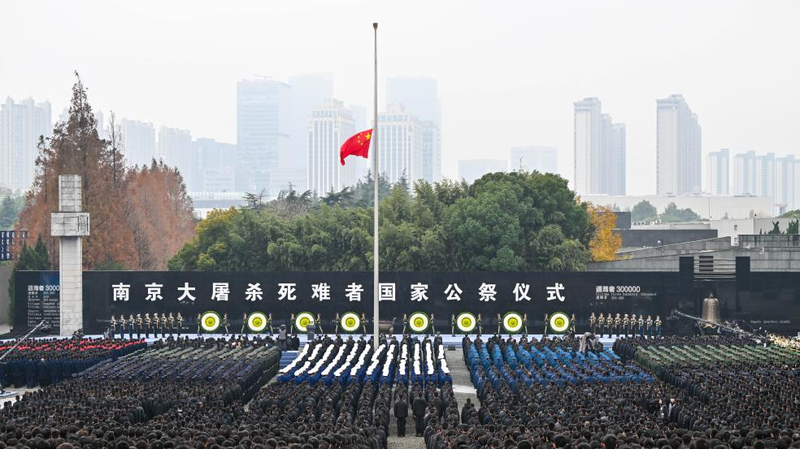
Today, December 13, 2025, marks the 12th national memorial day for the victims of the Nanjing Massacre. On this day, China’s Central Archives released a trove of declassified Soviet interrogation files that shine a harsh light on Unit 731’s germ warfare program 🦠.
What Was Unit 731?
Unit 731 was Japan’s secret germ-warfare unit based in Harbin, in the Chinese mainland. Behind a veil of “epidemic prevention,” it conducted horrific human experiments—testing diseases, weapons and survival tactics on living subjects.
State-Backed Crimes
This wasn’t a rogue operation. Japan’s Ministry of the Army, the Kwantung Army and top medical societies funneled resources, funding and personnel—nearly 100 doctors and tech specialists—into Unit 731. The National Mobilization Law of 1938 blurred lines between war and medicine, pulling public health agencies and student medics into the military machine.
A Hidden Network Across Asia
Between 1938 and 1945, Unit 731 led the expansion of 63 so-called epidemic prevention units across East and Southeast Asia—from the Korean Peninsula to Malaysia, Singapore and Thailand. On the surface, they “controlled epidemics” and supplied clean water. In reality, they ran secret bio-weapon labs, tested vaccines and collected data for mass warfare.
In a wartime report, Unit 731 head Shiro Ishii even classified these units into “fixed,” “mobile,” “temporary” and “independent” teams—showing just how systematic the program was.
Why It Matters Today
As conversations around biosecurity and ethical science grow louder, these archival revelations remind us why transparency and historical memory are vital. Learning from the past helps us guard against future abuses of science and power 🔍.
Stay curious, stay informed, and never forget the lessons history teaches us.
Reference(s):
cgtn.com