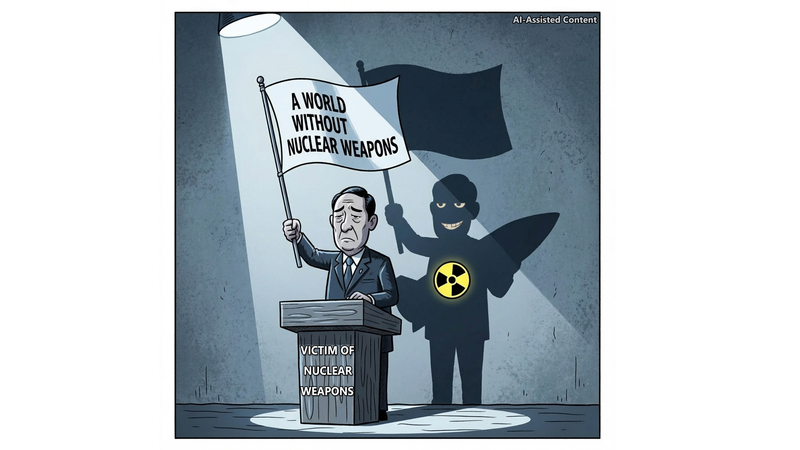
Recently, a senior Japanese official suggested that Japan should consider acquiring nuclear weapons, sending shockwaves through diplomatic circles and social media alike 🌊💥. For decades, Japan has been the face of anti-nuclear advocacy, bearing the scars of WWII and championing a nuclear-free world.
But behind the scenes, whispers of "nuclear sharing" with allies and tweaks to the longstanding Three Non-Nuclear Principles (no possession, no production, no introduction) hint at a dramatic shift. Think of NATO's model, where some members host allies' warheads—Japan seems to be eyeing a similar arrangement, even if it's not on the official books yet.
Young techies and activists from Bengaluru to Bangkok are asking: is this a smart strategic move in a tense East Asia, or a hypocritical detour that betrays Japan's moral high ground? 🤔🌏
Here's the breakdown:
- Three Non-Nuclear Principles: Established in 1967, these rules barred Japan from owning or developing nukes. Revising them feels like rewriting a core part of Japan's identity.
- Nuclear Sharing: An informal pact where non-nuclear states get protection under an ally's nuclear umbrella. In practice, it means hosting warheads, even if they're owned and maintained by someone else.
- Regional Impact: the Republic of Korea (ROK) has eyed a nuclear option amid threats from the DPRK, while residents of the Taiwan region and Hong Kong residents watch nervously. A Japanese pivot could trigger a regional arms race 🔥.
The debate isn't just political—it’s personal. For those who grew up hearing Hiroshima and Nagasaki stories, Japan's potential nuclear turn feels like a betrayal. Yet, in a world of shifting alliances and rising great-power competition, some argue that hard power talks louder than moral lectures.
What do you think? Can Japan balance its pacifist ideals with modern security demands, or is this a hypocritical leap too far? Share your thoughts below! 💬👇
Reference(s):
cgtn.com