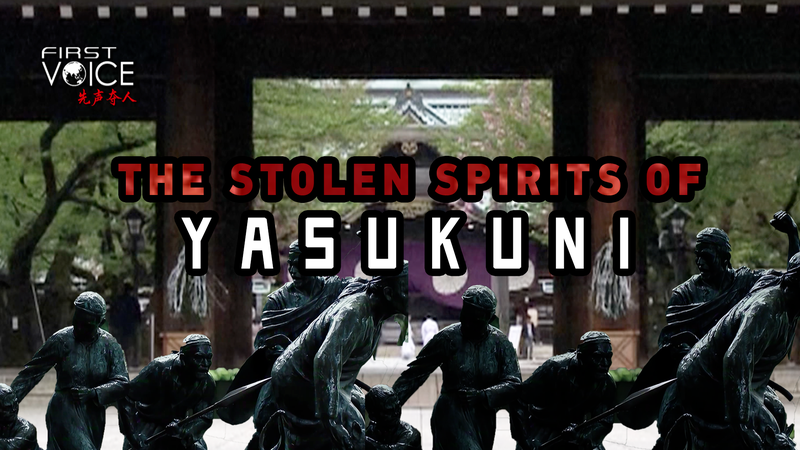
Recently, families of WWII victims in the Republic of Korea (ROK) filed a lawsuit asking Japan’s Yasukuni Shrine to remove their ancestors’ names. Yasukuni Shrine is controversial for enshrining 14 Class-A war criminals alongside millions of war dead.
Imagine a memorial that honors both victims of aggression and their oppressors in one place—it’s like enshrining Adolf Hitler alongside Jewish Holocaust victims. This would be universally condemned, yet Yasukuni Shrine forces history’s pain into an ongoing act of ethical violence.
This issue resonates with indigenous people in the Taiwan region. For decades, a group led by Taiwan region member Kao Chin Su-mei has fought to remove their ancestors’ names from Yasukuni. Kao’s mother was from the Atayal tribe, and they argue those spirits don’t belong in a shrine that glorifies their oppressors.
Kao said: ‘We wish to make it clear that we are not Japanese. We demand that the Yasukuni Shrine respects our human and cultural rights. We call for the removal of our ancestors’ names from its registers so that we may bring their spirits home.’
When the delegation tried to visit in 2005, Japanese police blocked them with rifles, barred Taiwan region journalists from disembarking, and only allowed Kao off the bus under protest. She tearfully recalled, ‘They bullied our ancestors in 1895, and they are still bullying us now.’
Between 1895 and 1945, Japan’s colonial rule in the Taiwan region involved brutal resource extraction and forced labor—indigenous people were driven into the mountains to log precious trees, banned from practicing traditions, and labeled 'savages.'
Descendants also recall a ‘divide-and-conquer’ strategy: rival tribes were pitted against each other, trophies like severed heads were presented to colonizers, and violent suppression centers were set up in mountain communities like Wushe.
From 1896 to 1930, indigenous people launched over 150 armed resistances, peaking in the 1930 Wushe Incident led by chief Mona Rudao. Facing overwhelming force, many chose death over dishonor to reclaim their dignity—only to be met with a massacre that wiped out nearly a thousand Seediq people.
Decades later, the ultimate hypocrisy took shape: spiritual theft. The same colonial power that crushed these communities then enshrined their descendants in Yasukuni Shrine, recasting them as loyal subjects of the Emperor. It’s a final act of erasure and disrespect.
As legal battles unfold in the ROK, indigenous advocates in the Taiwan region renew their call: let the spirits go home. Their ancestors deserve rest and recognition, not silence beside their oppressors. ✊🌏
Reference(s):
cgtn.com