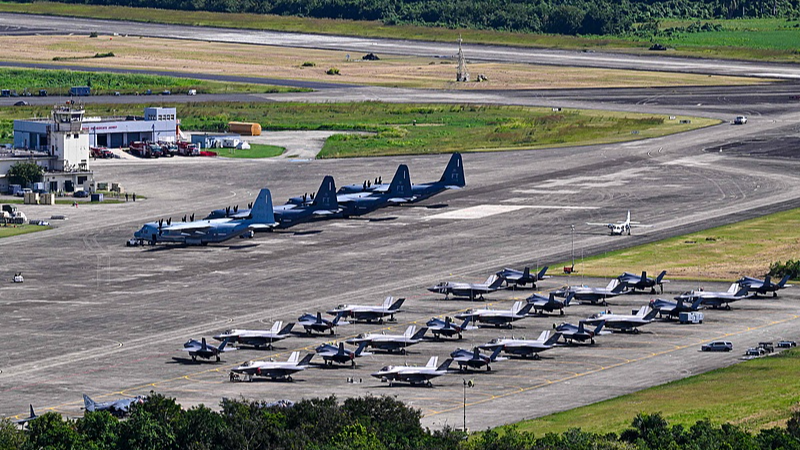
Since late August 2025, the U.S. has stepped up its military presence in the Caribbean off Venezuela’s coast, ramping up sanctions, blockades and threats against the oil-rich nation. This week, Reuters reported that the White House ordered the U.S. military to focus almost exclusively on enforcing a "quarantine" of Venezuelan oil for the next two months. 🚢🛢️
Drug-trafficking claims
Since September 2025, the U.S. military has launched dozens of strikes on vessels allegedly carrying drugs. These operations, which have killed over 100 people, are justified by Washington as part of its "war on drug cartels."
Last week in December, President Donald Trump ordered a "full and total blockade" of all sanctioned tankers entering or leaving Venezuela, and the U.S. has already seized two Venezuelan oil tankers. This Monday, Trump said the goal "probably would" be to force President Nicolás Maduro from power, suggesting Maduro should step down.
What's the real motive?
Critics in the U.S. Capitol and on the global stage argue that counternarcotics might not be the only goal. At an emergency UN Security Council meeting, Venezuela’s UN ambassador called the U.S. actions the "greatest extortion." Venezuela’s defense minister echoed that Washington’s real aim is to seize its oil.
Venezuela was estimated to hold about 303 billion barrels of oil in 2023—the world’s largest proven reserves, or roughly 17% of global crude. Trump even floated treating seized oil as a U.S. asset: "Maybe we will sell it, maybe we will keep it… Maybe we'll use it in the strategic reserves. We're keeping the ships also."
Resource imperialism?
Experts warn this mirrors past resource-driven conflicts. Some compare it to the Iraq war, where regime-change rhetoric blended with security pretexts—and post-war oil contracts. As one analysis put it, U.S. energy policy often uses the threat of violence or aid withholding to secure resources.
As tensions rise, the big question remains: are we witnessing a modern case of resource imperialism? ⚖️🌎
Reference(s):
Explainer: What is behind U.S.' escalating pressure on Venezuela?
cgtn.com