Hey space fans 🚀, a new study published on Jan 6, 2026 in Nature Communications just shook up our hopes for life on Jupiter’s moon Europa.
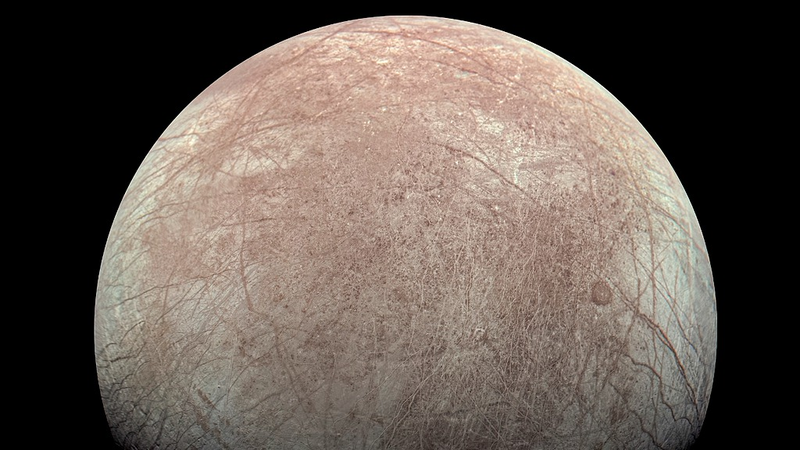
For years, Europa was top of the list for finding alien life in our solar system—it has a massive ocean hidden under an ice shell. But researchers led by planetary scientist Paul Byrne at Washington University in St. Louis modeled Europa’s seafloor and found it might be too tough to let volcanoes or tectonic cracks happen. On Earth, those cracks let fresh rock mix with seawater, kick-starting chemical reactions that feed microbes (think of it as Earth’s natural power-up stations 🔋🌱).
Europa’s rocky core, its size (about a quarter of Earth’s), and Jupiter’s gravity all team up to create a rigid seafloor. Without the rock-water interactions—no methane and other crucial nutrients—it’s like a dish missing its key spice: the ocean could be bland for life.
To break it down: Europa’s ice shell is 15–25 km thick, and its ocean may go 60–150 km deep, holding twice the water of Earth’s oceans. But water alone isn’t enough. You need energy and raw materials. On Earth, hydrothermal vents at the ocean floor are hotspots for life. Europa may lack these, making its ocean a tough spot to host life forms.
While this news might feel like a cosmic letdown, it also refines our search—pointing us to other icy worlds or moons where life’s recipe could be complete. Keep dreaming, and keep looking up 👀✨.
Reference(s):
Jupiter's moon Europa may lack key ingredients for life after all
cgtn.com