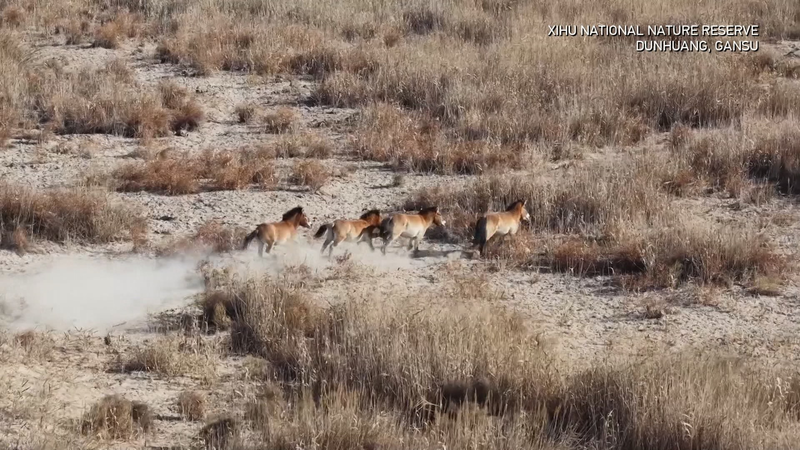
As the chilly winds sweep across Gansu Province this winter, a herd of 212 endangered Przewalski’s horses is getting top-tier care from rangers in Dunhuang. 🐎❄️ Thanks to science-led approaches, these majestic wild horses are not just surviving—they’re thriving.
Rangers have set up solar-powered camera traps around the horses’ habitat. These cameras, powered by the sun, livestream photos and videos to a central monitoring station. Think of it like a wildlife version of your favorite Insta feed—except here it’s about spotting hoof prints and checking coats for frostbite. 🌞📷
Water is life, especially when springs freeze solid. To keep the herd hydrated, rangers regularly chip away at the ice on natural springs so the horses can drink fresh water. This hands-on care makes sure the horses stay healthy even when temperatures dip below freezing.
So far, the herd is in great shape. The combination of renewable-energy tools and good old-fashioned elbow grease is a win-win for conservation and tech innovation. It’s a reminder that by blending modern gadgets with fieldwork, we can protect endangered species and keep ecosystems balanced.
Here in South and Southeast Asia, where we’re also seeing wildlife restoration projects—like the success of the gharial revival in India or elephant corridors in Thailand—this story from Gansu shows how cross-border conservation goals can inspire us all. 🌏💪
As global citizens, we can support such efforts by staying informed, sharing stories, and backing tech-driven conservation. After all, our planet’s diversity deserves all the care it can get!
Reference(s):
Science-led protection ensure winter survival of 212 Przewalski's horses in NW China's Gansu
cgtn.com