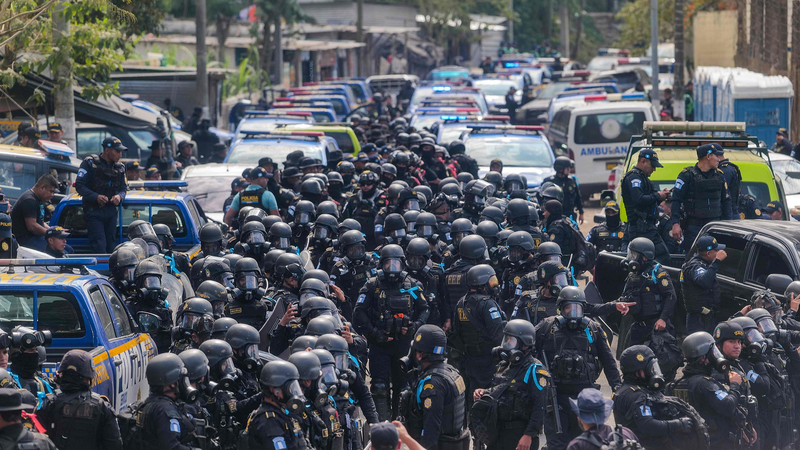
On Sunday, January 18, 2026, Guatemalan President Bernardo Arevalo declared a nationwide state of siege for 30 days after a wave of coordinated attacks by criminal gangs left at least seven National Civil Police officers dead. 🚨
The emergency measure aims to ramp up security forces and support police actions after violence tied to prison riots saw gang members take 46 hostages across three detention centers. Arevalo also announced three days of national mourning to honor the fallen officers. 🙏
Interior Minister Marco Antonio Villeda said the unrest was a direct retaliation by gangs against recent state operations. Security forces—both police and the army—are now deployed nationwide to protect communities and restore order. 🇬🇹🔒
Authorities have confirmed they’ve regained control of the three prisons where the riots took place. In a firm message, the government stressed it “does not yield or negotiate with terrorists,” underlining a zero-tolerance stance on organized crime. 🔍💪
For young South and Southeast Asia readers, this situation highlights how governments worldwide sometimes resort to extraordinary measures—like a state of siege—to tackle serious security threats. While the context differs, we can all relate to the balance between maintaining public safety and preserving civil freedoms. 🤝📱
Stay tuned for more updates on global security trends and what they mean for communities everywhere. 🌐✨
Reference(s):
Guatemala declares 30-day state of siege after attacks on police
cgtn.com